
Summary:
This week, we begin taking off our modern Western cultural glasses and putting on the lenses of the Ancient Near East. Because their world was so different from ours, reading the Bible faithfully means learning to see it as they would have understood it. While we can never fully recreate their culture, key concepts—such as the Father’s household—help us grasp how they lived, thought, and related to one another. This week is only a brief introduction; as we continue, we’ll explore more of the cultural background that shapes the biblical story, including covenants, levirate marriage, the kinsman‑redeemer, and much more.
First Things: The Story
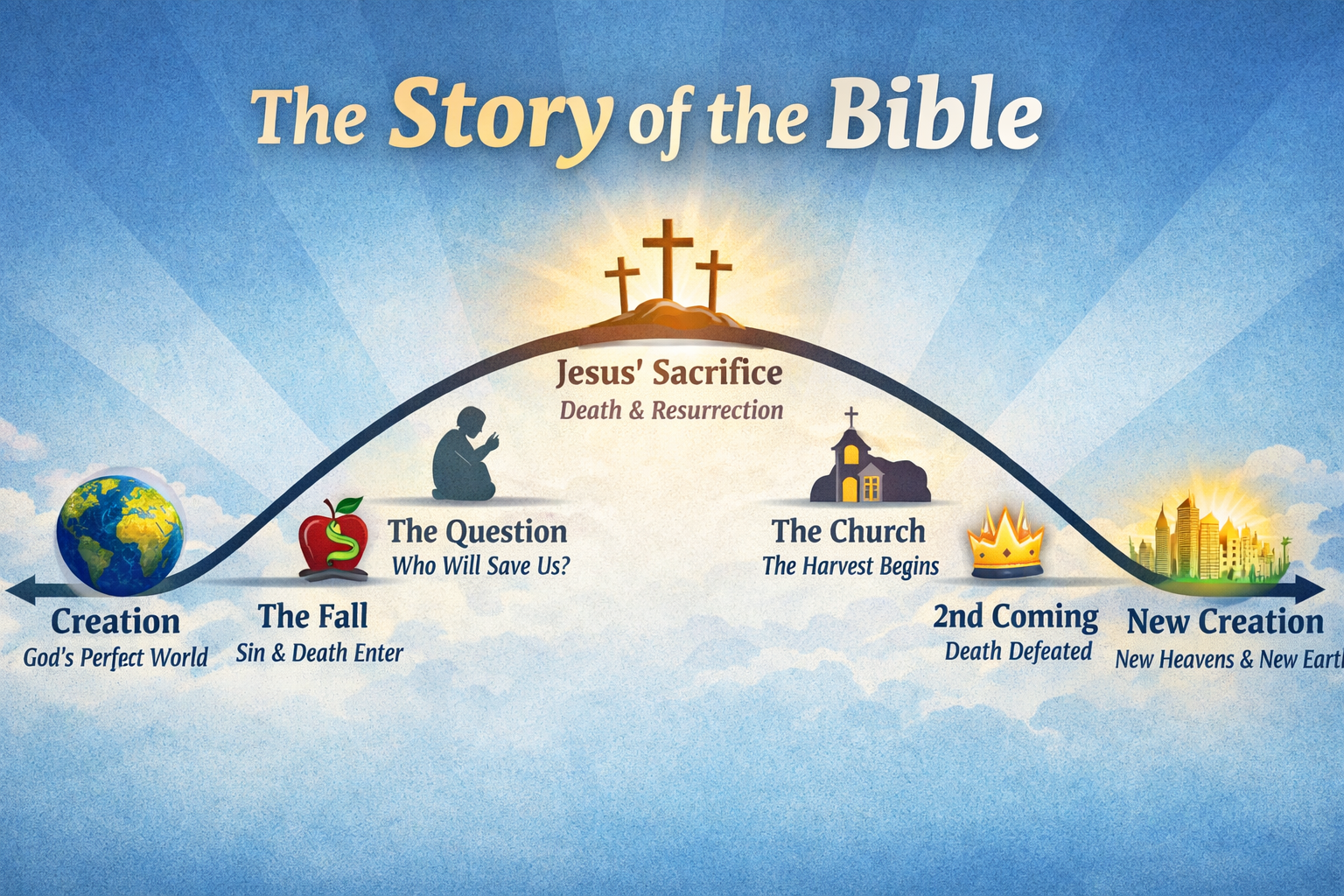
Before we explore the cultural world of the Ancient Near East, we first need to understand the basic storyline of the Bible. Like any story, Scripture unfolds through key movements: the setting of creation, the problem introduced by the fall (sin which leads to death), the rising tension of humanity’s need for rescue, the climax in Jesus’ death, burial, and resurrection, the ongoing harvest of His church, the resolution at His second coming when death is finally defeated, and the outro in the new heavens and new earth. This framework becomes the foundation for everything else we’ll study.
Videos, downloads & Links
Bible Reading, Mapping, & Notes
There is no reading this week, so I have included some maps of how you should start seeing the geography of Israel. Normally we see Israel like the maps in the back of the bible, but this should give you a little more “depth” to the land we will be studying.
Jesus in the story?
Shadows, Types and Appearances
This section highlights where Jesus appears in the biblical story and explains how each passage points to Him. Since we haven’t begun reading Scripture yet, there are no references for this first week—but soon we’ll trace how Jesus is revealed throughout the narrative as we move through the story together.